Elderly Care Choices: Comparing Costs, Providers, and Benefits of Assisted Living and Memory Care
Business Name: BeeHive Homes of Great Falls
Address: 2320 15th Ave S, Great Falls, MT 59405
Phone: (406) 205-4516
BeeHive Homes of Great Falls
At BeeHive Homes of Great Falls in Great Falls, MT, we offer assisted living, respite care, and memory care for people with dementia. Our residents enjoy living in a cozy place with knowledgeable and caring staff. We aim to meet each person's changing care needs and keep residents as independent as possible. We also plan events and senior living activities based on their interests and skills. Contact us immediately to learn more about how we can help your senior today!
2320 15th Ave S, Great Falls, MT 59405
Business Hours
Families usually do not begin researching senior care because life is calm and organized. Something has shifted. A parent left the range on, a partner with dementia roamed outdoors at night, or the caretaker simply can not stay up to date with medications, laundry, home upkeep, and constant supervision. By the time I satisfy families expertly, they are generally tired, fretted, and overwhelmed by choices: assisted living, memory care, respite care, in‑home assistance, or some combination of all of these.
Choosing in between assisted living and memory care is not simply a financial choice. It has to do with security, self-respect, and what every day life will really seem like for the person you like. The pamphlets tend to flatten the distinctions into a couple of marketing expressions. In practice, the space can be broad, and moving twice (from assisted living to memory care) is disruptive, both emotionally and financially.
This post walks through how these choices differ in services, staffing, environment, and cost, and how to match them to real‑world situations instead of abstract descriptions.
What assisted living in fact provides
Assisted living grew out of a simple concept: lots of older adults do not need a nursing home, however they likewise can not or do not want to manage alone in your home. The objective is to mix real estate and support in a manner that protects independence.
In most states, assisted living locals reside in personal or semi‑private apartment or condos with a little cooking area or kitchen space, a restroom adjusted for safety, and access to common spaces such as dining rooms, activity rooms, and sometimes outdoor courtyards. The building looks less scientific than a nursing home. Lots of residents still drive, go out with friends, or travel, although they may rely on personnel for medication reminders or assist with bathing.
From a services perspective, assisted living is built around help with activities of daily living: bathing, dressing, grooming, toileting, and transfers. Staff can likewise assist with medications, often using a main med cart or drug store blister loads. House cleaning, laundry, and meals are generally consisted of in the base rate.
What assisted living is not developed for is high‑risk habits or complex cognitive problems. Personnel are generally not geared up for regular roaming, exit‑seeking, aggression activated by dementia, or locals who can not securely call for assistance when they need it. Regulations differ, but there is typically a limitation to how much treatment or hands‑on assistance an assisted living facility can legally supply before a resident requirements either memory care or a nursing home.
A good way to think about assisted living is that it fits older grownups who need structure, assistance, and some supervision, however can still take part in their own safety. They can push a call button, follow basic instructions, and comprehend why particular borders exist.
What memory care includes on top of assisted living
Memory care looks comparable on the surface area: private or shared spaces, meals, housekeeping, activities. The essential differences sit behind the scenes in staffing, building style, programming, and policy.
Memory care systems are specifically created for locals with Alzheimer's illness and other dementias. The design typically includes a protected border with regulated exits. Hallways are frequently much shorter, circular, or designed to decrease dead ends that can worsen agitation. Color hints, large signs, and visual landmarks help homeowners orient. Outside areas are either completely enclosed or thoroughly supervised.
The staffing pattern is much heavier. Where an assisted living floor may have one caregiver for 10 to 15 residents during the day, memory care may aim for something like one caregiver for 5 to 8 locals, depending on the state and the operator. Staff are trained to handle habits such as sundowning, repetitive questioning, exit‑seeking, and resistance to care. Training consists of methods for redirection, non‑pharmacologic calming methods, and safe handling when locals set out or attempt unsafe movements.
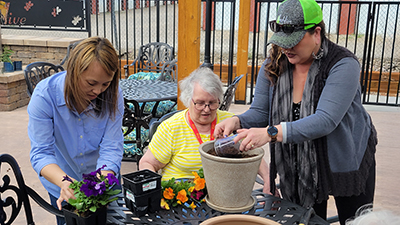
Programming in memory care is purpose‑built to match cognitive levels. Rather of a set up lecture, you are more likely to see sensory stimulation, music tailored to the resident's era, brief tactile tasks, basic baking activities, or folding laundry as a soothing, purposeful ritual. Activities are shorter, more frequent, and not dependent on memory retention. Personnel understand that you might run the same group 5 times in a week with a lot of the exact same people, which is fine.
Medication oversight is tighter as well. Residents often have numerous psychedelic medications that require mindful timing, particularly for sleep, habits management, and state of mind. In my experience, excellent memory care units work carefully with geriatricians or geriatric psychiatrists and are more proactive about tracking patterns in behavior that recommend a medical issue such as pain, infection, or delirium.
Safety expectations are also various. In memory care, the group assumes homeowners will forget directions, misinterpret threats, and stroll into scenarios they would once have prevented. The entire environment is built for that reality.
The blurry zone between the two
Families rarely have a neat box to fit their loved one into. I typically hear variations on the exact same concern: "Mom is absent-minded, however she still gowns herself and has long discussions. Does she truly need memory care?" Or the inverse: "Dad is physically strong and moves quickly. He roams, but he is not 'that bad' yet. Would assisted living suffice?"
The answer sits in a few useful questions.
First, is the person safe in an environment that is not locked or continuously monitored? If a resident has actually already opened a door and walked away from home, or has actually left the range on more than as soon as, it is risky to position them somewhere with open exits. Unlike a single‑family home, assisted living structures have several exits, more traffic, and more opportunities to escape without somebody noticing immediately.
Second, how does the individual respond to unknown environments and directions? Someone with early dementia who follows triggers and accepts guidance can sometimes do well in assisted living with a strong memory care program on site for future transition. Someone who ends up being frightened, paranoid, or resistant when they do not acknowledge a place might do much better starting in memory care where the routine is tighter and staff are utilized to those reactions.
Third, what is the projected trajectory? Dementia is progressive. If an individual is just barely safe for assisted living at move‑in, they may quickly cross into requiring memory care, and that second move can be disorienting and emotionally uncomfortable. I sometimes encourage families to favor the environment that will still fit the person in two years, not simply at this minute, particularly if finances can sustain the higher level of care.
There are likewise locals in assisted living who technically get approved for memory care but remain where they are due to the fact that of long relationships with staff and peers. That can work when the structure is reasonably little, staff understand the resident deeply, and threats are manageable. It stops working when roaming, aggression, or considerable incontinence become daily realities.
How expenses truly compare
On paper, assisted living often costs less than memory care. In practice, the comparison can be misguiding if you look just at base rates.
In lots of markets, a personal assisted living house might start in the range of 3,500 to 6,000 dollars per month, in some cases higher in big cities or luxury communities. Memory care frequently begins around 5,000 to 8,000 dollars. These are broad ranges, and some high‑end communities charge much more, however they provide you a sense of scale.
Assisted living rates typically consists of lease, fundamental utilities, some level of activities, and meals. Care is then included tiers or point systems. A resident who needs just medication management might pay a couple of hundred dollars more monthly. Someone who needs substantial help with bathing, dressing, and mobility might layer on 1,000 to 2,500 dollars or more in care fees. If a resident ends up being incontinent, begins to require 2 team member for transfers, or begins calling out often during the night, the regular monthly cost can jump significantly.
Memory care typically looks more expensive upfront, however it frequently bundles a greater level of care into the base price. The presumption is that the majority of locals will require assist with multiple daily tasks and will have cognitive impairment that needs more intensive guidance. There might still be tiers, but the range in between the lowest and highest is smaller, due to the fact that everybody is currently starting at a higher standard of need.
There are less apparent cost factors also. For instance, if you position an individual with moderate dementia in assisted living to "save money" and they repeatedly wander out or resist care, the center might require a one‑to‑one caretaker for periods of time that the family should pay for, or may notify that the resident must transfer to memory care. Each crisis, medical facility visit, and short‑term option includes cost.
On the other hand, some families choose personal in‑home caregivers combined with adult day programs to delay any move at all. In‑home care at 25 to 35 dollars per hour for 8 hours a day, 7 days a week, quickly exceeds 5,000 to 7,000 dollars per month, not consisting of lease or home maintenance. That might still deserve it for some, especially if a partner deeply wishes to keep their partner in the house and has the resources to do so.
One more angle is for how long somebody will live at that care level. If a reasonably healthy person with moderate dementia enters memory care, it is not unusual for them to live several years, often more than 5 or 7. If financial resources are tight, even a 500 dollar month-to-month difference in between assisted living and memory care adds up to tens of thousands over the total stay. That is a real trade‑off, and families require clear projections rather than wishful thinking.
Insurance, public advantages, and what they actually cover
A common surprise for households is discovering that traditional Medicare does not pay for assisted living or memory care room and board. It may cover physician visits, treatment, and some medical products, but not the core residential cost.

Some long‑term care insurance coverage do help with both assisted living and memory care, however just if the policy language clearly covers "assisted living facilities" or "residential care facilities" and if the resident fulfills specified requirements for requiring help with activities of daily living or for cognitive problems. It is important to examine the policy years before you require it if possible, and again at the time of claim, due to the fact that misunderstandings about waiting durations, everyday benefit maximums, and inflation riders can thwart planning.
For veterans, Help and Attendance benefits can contribute substantial month-to-month support that can be used to assisted living or memory care. These programs include documentation and eligibility requirements, but when they fit, they can make the difference between barely managing and having enough to choose a suitable setting.
Medicaid coverage is intricate and highly state‑specific. Some states have Medicaid waivers that assist spend for assisted living or memory care, however not all buildings accept them, or there may be restricted designated units. Even when available, the procedure to certify can take months, and some neighborhoods require a minimum period of private pay before accepting a Medicaid shift. Planning around this reality is an essential part of responsible financial decision‑making, rather than presuming that "Medicaid will step in later" without checking.
Services and staffing: what to look for beyond the brochure
When picking in between assisted living and memory care, focus less on abstract labels and more on what a day would really look like for your household member.
Ask how medication administration works. In some structures, med passes are rushed, with one nurse covering a large floor. In others, there suffices staff to invest a moment with each resident, check their swallowing, and notice agitation or confusion.
Observe dining. In assisted living, homeowners generally walk or wheel into the dining-room, read menus, and place orders. In memory care, personnel may utilize image menus, pre‑plated meals, or one‑to‑one assistance at the table. See whether residents are consuming or simply pushing food around. Food consumption is typically the very first thing to deteriorate when a person is overwhelmed.
Activity calendars can be deceptive. Fifteen items printed on a page do not imply fifteen meaningful experiences. Take a look at whether staff really lead activities, or if residents are clustered around a TV the majority of the time. In great memory care programs, you see staff appealing residents during transitions: folding towels in between meals, strolling with them in the halls, offering hand massages, and using music not just throughout "music hour" but throughout the day.
Staff turnover is another silent marker. High turnover breaks continuity, especially for homeowners with dementia who depend on familiar faces and voices. It is affordable to ask the director for how long their core care personnel have been there, and what they do to maintain them.
Finally, ask candidly how the building chooses a resident is no longer suitable for that level of care. An honest director will describe specific triggers: repeated roaming incidents, frequent physical hostility, unchecked habits during the night, or medical intricacy beyond their license. You would like to know whether the most likely future of your loved one fits within that structure's comfort zone.
How respite care suits the picture
Respite care is short‑term stay in an assisted living or memory care setting, generally from a few days to a couple of weeks. Households typically think of it just as a break for the caregiver, however it can serve a number of purposes in the decision process.
For caretakers who are on the fence, a respite stay can function as a trial run. A person with mild dementia may go into assisted living respite while their main caregiver journeys. If they change well, participate in activities, and show no safety problems, that informs you one story. If they end up being extremely distressed, attempt to leave, or need more hands‑on help than expected, staff might gently recommend that memory care would fit much better if a move becomes permanent.
Respite care in memory systems is similarly important. It permits staff to examine how a person with dementia functions in a structured environment. I have seen households choose not to move on with irreversible placement because the respite stay exposed that the individual was doing better in the house than they realized, or on the other hand, since it ended up being crystal clear how much pressure the primary caregiver was under.
From a simply human angle, respite care safeguards caretakers from burnout. A spouse caring for somebody with dementia in the house often neglects their own health. A week or 2 of respite can provide time for medical consultations, sleep, and psychological rest, which in turn may extend the duration they can safely continue home care.
Financially, respite is normally billed at an everyday rate that consists of room, board, and care. The per‑day cost is greater than the equivalent regular monthly rate, but due to the fact that the stay is brief, it can still be manageable. Some long‑term care policies repay respite, however it depends on the agreement language.
A basic comparison you can keep in your head
List 1: Key distinctions in between assisted living and memory care
- Safety style: Assisted living is usually unsecured, with citizens anticipated to stay in safe locations willingly. Memory care uses secured doors, enclosed courtyards, and simplified layouts to handle wandering danger.
- Staffing strength: Assisted living typically has higher resident‑to‑staff ratios and more self-reliance. Memory care offers more hands‑on aid and behavior management training.
- Program focus: Assisted living activities presume some memory, attention, and self‑direction. Memory care activities are much shorter, recurring, sensory‑based, and adjusted for cognitive loss.
- Cost structure: Assisted living normally begins lower however can climb with included care requirements. Memory care starts higher but frequently bundles more services.
- Appropriateness: Assisted living fits those who can participate in their own safety and understand basic cues. Memory care fits those with moderate to innovative dementia, wandering, or behavioral symptoms.
This psychological checklist is not ideal, however it anchors your thinking as you consult with communities.
Emotional truths and family dynamics
Elderly care choices seldom depend upon truths alone. Regret, guarantees made years ago, brother or sister differences, and generational expectations all shape what feels acceptable.
Many adult kids battle with the idea of locking doors around a parent. Transferring to memory care seems like an action that confesses the dementia is "that bad." Others associate memory care with the most innovative stages they have actually seen, perhaps a relative who no longer recognized anybody. Positioning a still‑recognizable, conversational parent because environment feels premature.
On the other hand, caregivers in your home, frequently partners in their seventies or eighties, may reduce risk out of love and habit. "He just wandered once." "She just gets aggressive when she is tired." They remember the complete individual, not just the disease. When I sit with them, I try not to argue with their memories. Instead, we talk about concrete threats and what a normal week resembles now, hour by hour. The level of fatigue that surfaces in those discussions frequently changes their perspective.
Siblings can disagree, especially if one lives nearby and brings more of the everyday load. The far-off sibling might prefer assisted living to preserve independence, not totally grasping how much behind‑the‑scenes guidance the local caretaker is offering. Sometimes a structured respite stay exposes the ground truth more clearly than any family discussion.
It helps to bear in mind that a move to assisted living or memory care is not a failure of love. It is a change in the care setting when the home environment can not securely or sustainably satisfy the person's needs. Framing the move as a shift from "doing it all yourself" to "leading the care group" can assist families reorient.
Questions to ask when touring communities
List 2: Practical questions to guide your visits
- "Explain a resident who is not suitable for this level of care. What takes place when somebody reaches that point?"
- "What is your typical staff‑to‑resident ratio on days, nights, and nights, and how frequently do you use company personnel?"
- "How do you support residents who wander, withstand bathing, or end up being agitated? Can you provide current examples?"
- "If my parent's dementia progresses, can they stay in this building, or would they need to transfer to another location?"
- "What increases in monthly expense should I expect as care needs change, and can you show genuine examples of current resident charge structures, with names removed?"
The goal is not to capture anybody out, but to draw out concrete descriptions rather of general reassurances.
Matching setting to real‑world situations
Different situations require various options, even when medical diagnoses look comparable on paper.
A widowed parent with early‑stage dementia, still driving however significantly lonesome and missing doses of medication, may thrive in assisted living, especially one with a strong memory clinic close-by and structured activities. The social engagement and regular meals can slow practical decline.
By contrast, a physically robust individual with moderate Alzheimer's who has actually currently roamed from home more than as soon as, ends up being suspicious in the evening, and periodically lashes out when puzzled, is typically more secure in memory care from the start, even if they can currently shower or dress with only prompting.
If a frail spouse with numerous medical issues and early dementia deals with a partner in their eighties who manages relatively well but is overwhelmed by hands‑on care, a hybrid plan may assist: in‑home assisted living great falls mt caregivers throughout the day, adult day memory programs numerous days a week, and set up respite care in memory systems a couple of times a year. That pattern often extends the period they can stay together at home before thinking about irreversible placement.
There are likewise times when medical complexity eclipses the cognitive problem. Somebody on frequent oxygen, recurrent IV antibiotics, or needing knowledgeable wound care might need a nursing center regardless of whether dementia exists. Assisted living and memory care are not replacements for competent nursing when the scientific requirements are that high.
Bringing everything together
Choosing between assisted living and memory care is less about chasing the ideal choice and more about discovering the setting that finest lines up with the individual's security needs, personality, disease trajectory, and financial truth. What matters most is the quality of the care group, the fit in between the environment and the individual's habits patterns, and the sustainability of the prepare for both the resident and the family.
Respite care, discussions with doctors who understand geriatric and memory conditions, and candid talks with center directors frequently clarify the course. Families who do finest are not the ones who discover a magic service, but the ones who remain available to changing the plan as the health problem evolves.
Senior care and elderly care are long journeys, not single choices. When you select an assisted living or memory care setting, you are not securing your fate. You are picking the next right action in a process that will keep unfolding. If you ground that action in clear information, truthful self‑assessment, and respect for the individual's dignity and safety, you are on solid footing.
BeeHive Homes of Great Falls provides assisted living care
BeeHive Homes of Great Falls provides memory care services
BeeHive Homes of Great Falls provides respite care services
BeeHive Homes of Great Falls supports assistance with bathing and grooming
BeeHive Homes of Great Falls offers private bedrooms with private bathrooms
BeeHive Homes of Great Falls provides medication monitoring and documentation
BeeHive Homes of Great Falls serves dietitian-approved meals
BeeHive Homes of Great Falls provides housekeeping services
BeeHive Homes of Great Falls provides laundry services
BeeHive Homes of Great Falls offers community dining and social engagement activities
BeeHive Homes of Great Falls features life enrichment activities
BeeHive Homes of Great Falls supports personal care assistance during meals and daily routines
BeeHive Homes of Great Falls promotes frequent physical and mental exercise opportunities
BeeHive Homes of Great Falls provides a home-like residential environment
BeeHive Homes of Great Falls creates customized care plans as residents’ needs change
BeeHive Homes of Great Falls assesses individual resident care needs
BeeHive Homes of Great Falls accepts private pay and long-term care insurance
BeeHive Homes of Great Falls assists qualified veterans with Aid and Attendance benefits
BeeHive Homes of Great Falls encourages meaningful resident-to-staff relationships
BeeHive Homes of Great Falls delivers compassionate, attentive senior care focused on dignity and comfort
BeeHive Homes of Great Falls has a phone number of (406) 205-4516
BeeHive Homes of Great Falls has an address of 2320 15th Ave S, Great Falls, MT 59405
BeeHive Homes of Great Falls has a website https://beehivehomes.com/locations/great-falls/
BeeHive Homes of Great Falls has Google Maps listing https://maps.app.goo.gl/1z93HCVXHyRSY9gU6
BeeHive Homes of Great Falls has Facebook page https://www.facebook.com/beehivehomesgreatfalls
BeeHive Homes of Great Falls has an Instagram page https://www.instagram.com/beehivehomesofgreatfalls
BeeHive Homes of Great Falls won Top Assisted Living Homes 2025
BeeHive Homes of Great Falls earned Best Customer Service Award 2024
BeeHive Homes of Great Falls placed 1st for Senior Living Communities 2025
People Also Ask about BeeHive Homes of Great Falls
What is BeeHive Homes of Great Falls Living monthly room rate?
The monthly cost for assisted living, memory care, or senior care in Great Falls, MT depends on the level of care needed. Each resident receives a personalized assessment, and pricing is based on that evaluation. BeeHive Homes is known for clear, transparent pricing with no hidden fees
Can residents remain at BeeHive Homes as their care needs change?
In many cases, yes. BeeHive Homes of Great Falls is designed to support residents as their needs evolve, whether that means increased assistance with daily living or transitioning to memory care within the BeeHive network. Residents may remain as long as their needs can be safely met without 24-hour skilled nursing
What types of senior care are offered at BeeHive Homes of Great Falls, MT?
BeeHive Homes of Great Falls provides a range of care options, including assisted living, memory care, respite care, and specialized traumatic brain injury (TBI) assisted living care. Care is offered across eight (8) residential-style BeeHive Homes located throughout the Great Falls community, each designed to support a specific level of care
What is Traumatic Brain Injury (TBI) assisted living care?
Traumatic Brain Injury assisted living care is designed for individuals who need daily support following a brain injury but do not require 24-hour skilled nursing. At Fireweed Home, BeeHive Homes of Great Falls provides structured routines, personalized assistance, and consistent supervision tailored to the unique needs associated with TBI
Can families tour BeeHive Homes of Great Falls?
Absolutely! Families are encouraged to schedule a tour to learn more about assisted living, memory care, and senior living in Great Falls, MT. To arrange a visit or speak with our team, please call (406) 205-4516
Where is BeeHive Homes of Great Falls located?
BeeHive Homes of Great Falls is conveniently located at 2320 15th Ave S, Great Falls, MT 59405. You can easily find directions on Google Maps or call at (406) 205-4516 Monday through Sunday Open 24 hours
How can I contact BeeHive Homes of Great Falls?
You can contact BeeHive Homes of Great Falls by phone at: (406) 205-4516, visit their website at https://beehivehomes.com/locations/great-falls, or connect on social media via Facebook or Instagram
Conveniently located near Beehive Homes of Great Falls AMC CLASSIC Great Falls a great movie theater with full food & drink menu. Catch a movie and enjoy some great food while you wait.